XIX. The Emerald Edge
April 12th, 2025
The cabin lights dimmed. Engines screamed. I felt the plane lift, heavy wheels leaving earth, and just like that — I was gone again. Into my unknown.
When we reached altitude, I pressed my forehead against the window. Below me, through breaks in the clouds, the Big Sur coastline slid by, those same ridges and trails I’d been running just days before, now reduced to memory. The sky burned molten orange as the sun fell, then swallowed itself in darkness. Outside the tiny oval window, the world was nothing but blackness, broken only by the occasional scatter of lights, little constellations of human life, flickering in the void.
I spent the night in an airport, a liminal world of fluorescent light and restless bodies. Shops pushed trinkets, travelers pushed past each other, everyone rushing toward somewhere. I just sat and watched, still as stone, while chaos circled me. It felt like molting skin — like I was leaving behind a shell of the person I’d been, stepping toward something unformed.
April 13th, 2025
Another plane. Smaller now. Again the cabin lights dimmed, engines howled, and we lifted into daybreak. Outside was nothing but a white sea of clouds. I drifted off, then jolted awake as the plane shuddered. The seatbelt light flashed. We dropped, broke through the clouds.
Rain streaked across the window, blurring the world. Through the haze I made out ocean, then a narrow channel between two mountainous islands, both blanketed in endless evergreen forest that fell abruptly into the sea. The plane descended, tires slamming into wet pavement, skidding before they caught. Across the water I saw it: a small town glittering against the grey. My home for the next six months. Ketchikan, Alaska.
The ferry from the airport cut across the narrows under a sky the color of steel. Rain fell in sheets, blurring the outline of the forested hills ahead until they looked less like land and more like a dream taking shape. I squinted against the rain. Ketchikan. Alaska. The new edge of my map.
For months I had told myself this would be it — the clean break, the fresh start. Santa Barbara was long behind me, Death Valley, Zion, the West, all of it. Every place I had run to, every party I’d stumbled through, every joint and cigarette lit beneath a different set of stars — none of it had stuck. But this? A town carved into rainforest, where mountains tumbled straight into the sea, where floatplanes buzzed overhead and the forest looms dark and brooding, yet strangely inviting. Surely this was where I could shed the weight I’d been carrying.
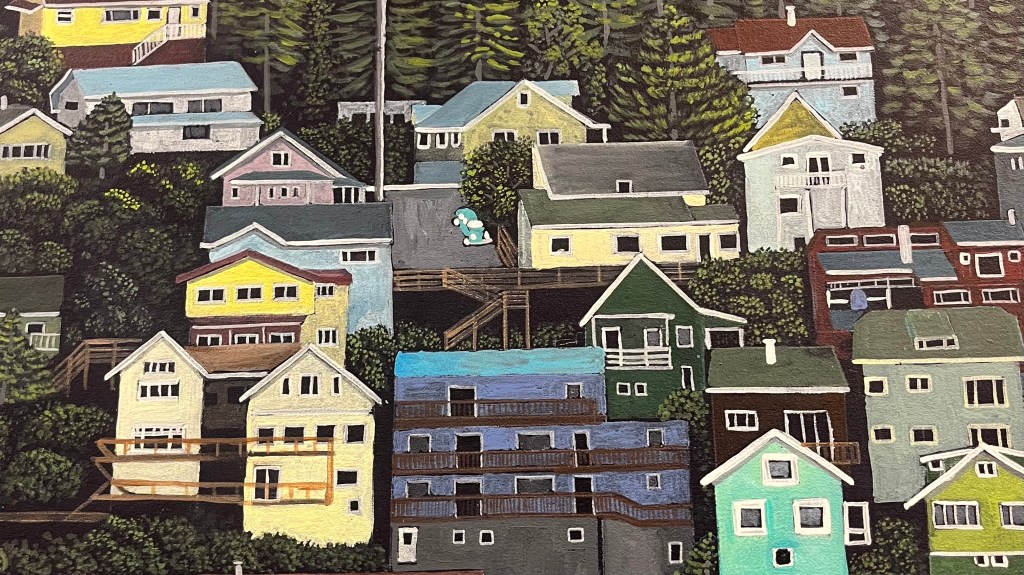
The ferry horn bellowed, low and mournful, as we approached the dock. The water churned gray-green beneath us, kelp swaying in the current. Beyond the pier, the town clung to the hillsides, houses painted in reds and blues and yellows, stacked crooked against the mist. It looked like something out of a dream.
I shouldered my pack and stepped out into the rain. Cold drops stung my face, plastered my hair to my forehead, beaded and fell from my jacket. I didn’t care. The air smelled like cedar and salt and something raw, something alive. I told myself, right then, that this was the place.
An email had promised someone would pick me up, but no one came. I waited. Checked my phone. Nothing. Forty minutes slipped by in the storm until finally a cab rolled by, headlights smeared by rain. I flagged it down. The driver, an older man, weather-creased and grizzled, gave me a look.
“Seasonal worker, huh?”
I laughed. “That obvious?”
As we drove, he pointed out the essentials — grocery stores, gear shops, cruise berths — while I soaked it all in with wide, eager eyes. He dropped me at the address I’d been given: a windowless building with peeling blue paint, pressed tight amongst other houses on the narrow street. I knocked. No answer.
Shit.
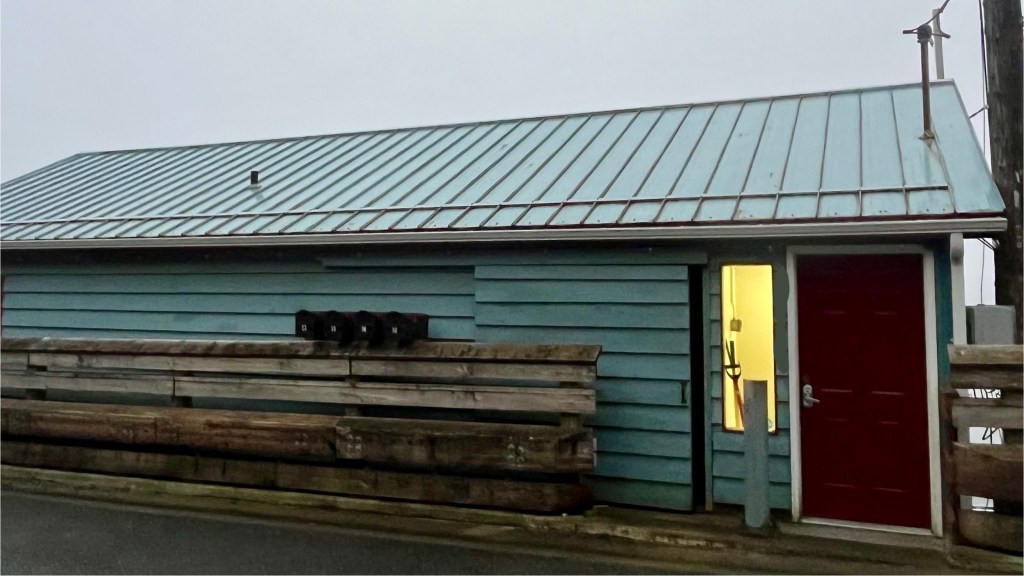
Other addresses were listed in the company email, so I shouldered my pack and started walking. The town was dead. Boarded storefronts. Empty streets. Rain pounding pavement. I knocked on one door after another — silence. With every failed attempt the rain seemed to fall harder. I thought about finding a hotel, but every one I passed was shuttered. In the email there was one address listed that I hadn’t tried, I plugged it into the map, a forty–minute hike up into the hills that cradled the town. It was my only shot.
I climbed through the neighborhoods, sweating under my soaked layers, hair dripping into my eyes, my breath steaming in the cold. By the time I reached the house I was running on the fumes of hope. I knocked. Silence. Then — the sound of shuffling.
The door opened to a woman with kind eyes, warmth spilling out behind her.
“Please tell me you work for Alaskan Travel Adventures,” I stammered.
She smiled, waved me inside. Another woman behind her, nodding. “We do. Come in.”
Relief crashed over me. “Thank god.”
Inside, I peeled off my drenched layers, dripping, creating a puddle on the floor. I told them my story — stranded at the airport, wandering town in the storm. They laughed softly, then pointed out what I’d missed: the manager’s phone number, buried halfway through a long email. My face flushed, but I laughed too. Embarrassed, I dialed. The manager told me she would come.
Not long after, I was loaded into a jeep and driven back through the rain — to the very same windowless building where I had been left by the taxi a few hours before. Only this time, I was led inside. Downstairs. Through a door marked “B.”
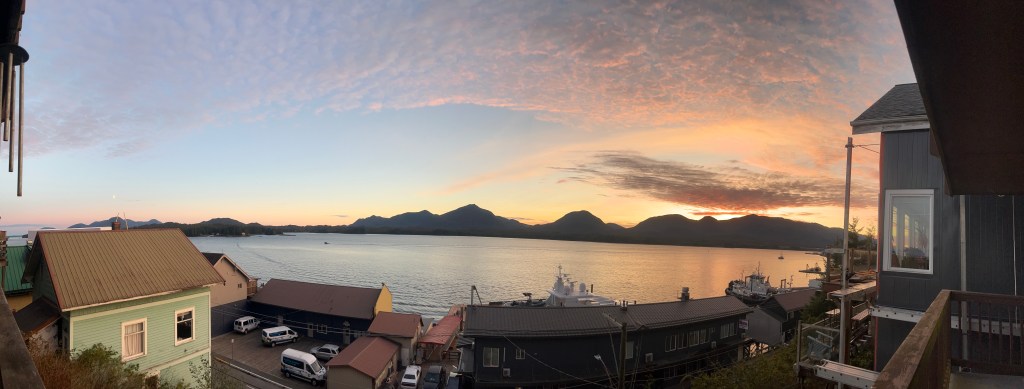
It opened into an apartment with real character — a corner kitchen, hideous wallpaper, a table ringed by camp chairs, a small TV next to a stack of a few DVDs. But what stopped me in my tracks was the balcony: it looked straight out over the narrows, where green mountains dropped into the sea and mist shifted like breath.
The manager wrote the door pin on a scrap of paper. “It’ll be a while before your roommates show. Work starts soon. Now that you’ve got my number, I’ll text you the details.”
And just like that, I was alone again.
I dropped my pack, peeled off my jacket, collapsed onto the straw-colored couch, and stared up at the popcorn ceiling. This place? All to myself? At least for a little while.
Bitchin’.
April 15th, 2025
A couple days later, I was picked up in an old rattling green van — The Pickle. I’d come to learn it would only get more tired and broken down as the season went on. Inside was what would become my family for the next six months: a mismatched crew ranging from eighteen to nearly fifty, all with the same wide-eyed, unsuspecting look — green.
It was mid-April. Rain beat aggressively against the windows as The Pickle chattered down the Tongass Highway. Conversation was sparse, mostly introductions mumbled over the hum of the tires. Everyone was still tucked inside their shells.
Brooklyn went first — mid-twenties, from Chicago. I’d met her after my rainy walk from the airport a few days before. Sweet, socially sharp, with big eyes that hid some chaos behind them.
Cat from Virginia — twenty-one, quiet, watching the forest slide past the glass with a resting face that said back off.
Kyler and Karlie — nineteen and eighteen, a newlywed Mormon couple from Idaho.
Mikey — early thirties, from everywhere and nowhere, a musician with that old-soul weariness around the eyes.
Meg — mid-forties from the PNW, the woman I’d crossed paths with after that drenched walk days before. She’d lived a full life: career, school, structure. Then she’d decided she was ready for something new.
And finally, Dallas and Kait — mid-twenties, a couple from the East Coast who’d fallen in love at a ski resort in Colorado and hadn’t stopped moving since.
A ragtag crew if there ever was one. On that rainy day in April, I had no idea how close we’d grow through the coming highs and lows, the endless hours, the excitement of the Alaskan tour season.
The van pulled off the highway and lurched into a dirt lot, tires sinking into potholes. Someone slid open the side door, and we all tumbled out into the rain, ducking through the downpour into the open door of a cream-colored tin warehouse.
Inside the warehouse, we gathered in a loose ring of tired plastic chairs, setting our packs down with that quiet, apprehensive air of strangers about to become coworkers. The space smelled faintly of cedar and rain, the concrete floor still damp where puddles followed us in. A red canoe sat perched on a couple of 2x4s like it had been waiting all winter to touch water again.
Tulip — the manager who’d dropped me off a few days earlier — stood before us. Late twenties, bright face, and a bounce in her step that felt like sunshine breaking through the clouds, her energetic cadence was almost concerning given the dreary conditions outside. She welcomed us to the 2025 season with the kind of optimism only the first day can hold.
Then there were the bus drivers: Brandon, Ed, and Ron.
Ed, from Arizona, lived on a boat in Ketchikan and had clearly lived his life hard and fast — his motto, as I’d soon learn, was “I don’t give a fuck.”
Brandon, a local, spoke and moved with the gruff weight of a bear, years of Alaskan winters etched into his tone.
And Ron, from Oklahoma, was quiet and kind, with the soft steadiness of someone’s grandpa, always wearing a subtly mischievous look beneath a fluffy mustache.
We sat in near-silence while everyone shuffled to get comfortable, cold air wrapping around us. Unlike other seasonal jobs where I was the new kid walking into an established crew, this time everyone was the new kid — and it showed. For many, this was the biggest leap they’d ever taken. None of us knew exactly what we’d signed up for, but bailing didn’t feel like much of an option.
Still, the thought made me smile. Different corners of the map, different ages, different lives — and yet, here we were, gathered in a tin warehouse on a rainy April day in Southeast Alaska. With the promise of the kind of summer you one day tell your kids about, maybe even your grandkids. Some were hired to guide jeep tours, others to lead lake tours in big Tlingit replica canoes. As for me? I’d landed the island hiking-guide gig, and damn, that lit me up.
Tulip kicked off the day with quick intros, icebreakers, and a crash course in what to expect from the season. The hours dragged on — a flood of logistics, safety briefings, and information. It was clear this would be the most demanding job I’d ever worked, and hopefully the most rewarding.
The following weeks blurred together.
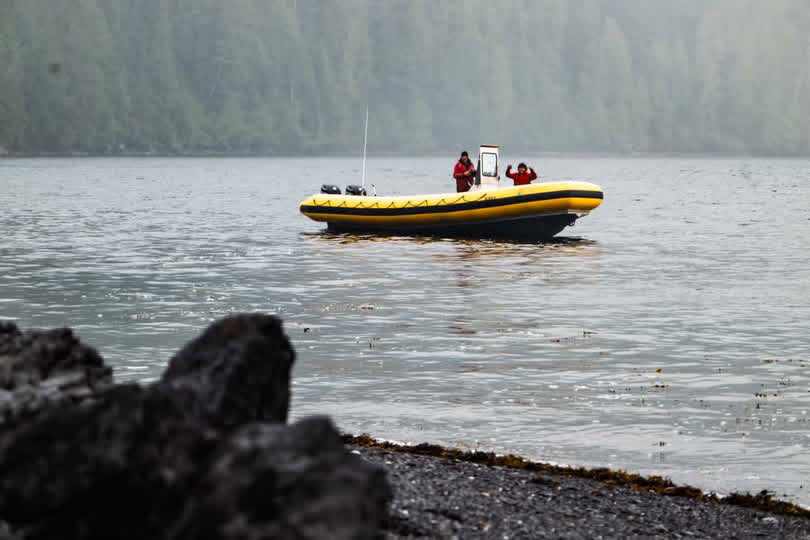
First came the days where we learned what we’d need to be experts in — everything from local flora and fauna to Tlingit legends, from banana slugs to the tides. Then came the setup: dropping docks into the lake for canoe tours, checking the jeeps, hauling the big yellow banana boats out of storage and into the waters of Clover Pass. Those boats would spend the summer ferrying guests to and from Betton Island — my island, my tour.
The first wave of 2025 guides got close fast. The first deep connection I made was with Brooklyn — spiritual, grounded. A somatic practitioner chasing a change of pace. We found comfort in each other’s presence, an ease to skip the small talk and get to what was real.
April 22nd, 2025
After a long, cold day dropping docks into the lake, we rode in the back of The Pickle, rumbling down the eight-mile pothole road that stretched from the lake to the warehouse — swapping stories about past situationships. That’s when she showed me a text thread that had cut her deep. It was eerily similar to the way things ended with Dani. The same hard drop — casual messages one day, radio silence the next.
Naturally, I pulled up my own thread with Dani, the one still buried in my messages app. That’s when I saw it — a small note at the bottom of our conversation. She’d kept the last audio message I sent before leaving for Alaska. Just seeing that… it did something to me. A small jolt of peace. Solace, even. Proof that she’d heard me — that some part of her had listened.
I hadn’t thought much about her since the season began, buried under the rhythm of work and new faces. But that glimpse reopened something. A thread to grasp. Maybe there was still a chance. Another part of me fought it — this was supposed to be a new chapter. Coming north was meant to rebuild, not to chase fading taillights again.
That night I walked up the hill to Brooklyn’s place. We stayed up late, talking through the ghosts of people who’d drifted from our orbits. There was more pent up inside me than I’d realized. I laid everything out — all the tangled emotion I’d carried for months — and by the time I walked home through the dark, wet streets, a sense of lightness followed me. The air was cold and clean, and it felt like I’d finally let go.
April 23rd, 2025
Brooklyn and I grew closer after that — two souls syncing at the right time. The next morning I woke with a pep in my step. The team spent the day launching 800-pound Tlingit canoe replicas into the lake — long, heavy, carved like relics of another world — and even under gray skies, I felt alive again.
That night she came over with a bottle of wine. We sat on the old couch wrapped in quilts left by guides from seasons past, peeling back more layers of ourselves. When a lull hit, I picked up my phone to check the time. Ding.
My stomach flipped. My body went electric — a hum through every nerve.
On the screen, glowing in the dark, was her name.
Dani.
Holding my breath, I opened the message.
I’m sorry for how things turned out, it was never my intention initially. But my world has turned upside down, and I can’t explain it much now, but give me like 2 months and I’ll be able to talk about it more. I’m not expecting you to answer, nor do I need one currently, but I want you to know how excited I am for you and your adventures and I hope Alaska has been everything you wanted and so much more. Make memories, get some good flics, and for now I’ll be cheering you on silently and from a distance. I hope the bridge isn’t fully burnt and we can go on another adventure one day in the future. Nothing but respect for you Matt.
I was ecstatic — everything I’d wanted to hear. Needed to hear. But something deeper tugged at me.
It was everything I wanted to here and it hit like lightning.
My body hummed.
Breath turned heavy.
The room felt alive — pulsing.
Behind my eyelids, a vision unfolded: a white snake coiling around a column, endlessly spiraling upward. Its body shimmered like light through water. Something inside me had come undone.
Energy rose from the base of my spine to the crown of my head, a slow, burning current that made my fingers tremble. I felt charged — like I could move mountains with my mind. For a moment, there was no past or future, no Dani or Brooklyn or Alaska — just pure current flowing through me. I was tapped in.
Brooklyn sat across from me, eyes wide, reading my body like a pulse.
“Hey,” she said softly, “what’s happening right now?”
I tried to speak, but words caught in my throat.
“I—I just saw something,” I finally got out. “Behind my eyelids. A snake. White. Twisting up a column. I could feel it. Like… it was another limb.”
She leaned in, grounded as ever, her energy calm against the storm overtaking me. “That sounds like Kundalini,” she said, voice low, deliberate. “It’s energy — it moves through the body like that, rising from the root up the spine. It’s powerful. It can change people.”
Her words sank into me, mixing with the hum still vibrating in my bones. I felt both electric and weightless, like I’d just crossed some invisible threshold.
For a long moment, we sat in silence. Rain drummed against the window, the heater rattled, the room carried the smell of damp jackets and red wine. I stared at my hands — the same hands that gripped a steering wheel for miles and miles, had been beaten in the sun, had a scar forming from the cigarette burn — and they felt new. A kind of alive I hadn’t felt in a long time.
Brooklyn smiled faintly, watching me settle.
“Whatever that was,” she said, “you just touched something real.”
And I believed her.
Because whatever had woken inside me — it wasn’t just energy.
It was a remembrance.
Like a part of me I’d forgotten was finally clawing its way back to life.
XX. The Alaskan Summer
May 2025
By the time the first cruise ships docked in Ketchikan, everything was ready.
Was I nervous? Absolutely. I was about to lead strangers from all over the world on a hike through the Alaskan rainforest, talk about trees and totems, and pretend like I’d done it all before.
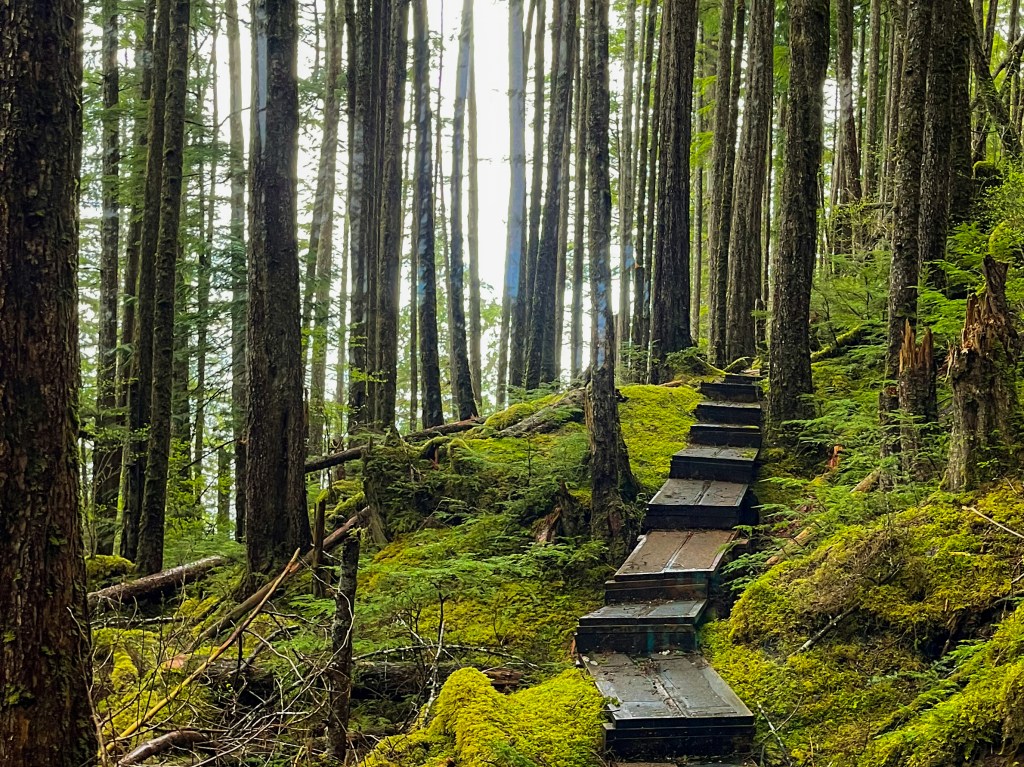
But when that first boatload of guests stepped onto the beach of Betton Island, something shifted. Confidence surged through me — this was what I was meant to do. Months later, I can barely remember the details of that first tour — just that I stuttered, forgot a few facts, and probably left out half of what I was supposed to say. But I do remember the smiles, the solid handshakes, and a few crisp twenty-dollar bills tucked into my palm.
As they climbed back onto the banana boat and waved from the water, I felt the tension drain from me.
The season had just begun, but I already knew — it was going to be a good one.
Before I knew it, I’d been in Alaska nearly a month, and my roommates started trickling in.
First was Keaton, a kind soul from Idaho with serious talent on the guitar — the kind of player who makes it look effortless. His voice carried that raspy, outlaw grit that belongs around a campfire with a half-empty whiskey bottle and stars overhead.
Next came Westin, calm and respectful, the kind of guy who listens more than he speaks. He’d spent two years serving a mission for the Church of Latter-Day Saints in Japan, and you could tell — everything about him had this grounded patience.
And then there was CJ.
Oh, CJ.
CJ is hard to put into words. I’d never met anyone so charming and offensive at the same time. He spoke in what he called “Cjanese” — a language entirely his own — spinning slang and half-jokes so fast you couldn’t tell where the bit ended and the truth began. His introduction to the rest of the crew was… polarizing, to say the least.
The guys? We were all pretty much down with him right away. He had that reckless humor and laid-back cool that made for good conversation and better beer talk.
The girls? Every single one of them immediately agreed:
“Yeah, this guy’s an asshole.”
By the time I had roommates and I was polishing my tour speech, I was settled in. But something was nagging at me. Ketchikan — and the Alaskan experience — was not the fix-all I thought it would be.
With Brooklyn, after work, we’d stay up late drinking wine and smoking cigarettes on the porch. Then when CJ arrived, I’d never deny a beer when it was offered. The only reason I wasn’t smoking weed was the threat of Coast Guard drug tests. I kept telling myself, I’m just settling in, this is natural. Once I get into a routine, I’ll sober up. I’ll find the clarity I’ve been looking for.
But I wouldn’t admit that wasn’t true. Hell, all the traveling through the West hadn’t gotten the monkey off my back. And slowly, the realization I’d known all along began to sink in — you can’t run from yourself.
I was still plagued by cravings. Nothing in particular, just the need for something to take the edge off — a buzz, a burn, the curl of smoke in my lungs. I felt broken.
The work helped, though. The tours were demanding — a performance, really — and to get the tips, I had to be sharp. Living with Keaton and Westin, both devout followers of Christ, meant I was in a clean, calm environment. They never drank, never smoked, and their quiet faith filled our apartment with this strange peace. I found myself drinking less, sleeping more, waking up clearer. But the pull never fully left.
That’s when CJ and I had a simple conversation that changed everything.
I’d taken a liking to the guy — well, not at first. My first impression was what a douchebag. But after a few days, I learned his bit, his humor, his strange poetry. He had this way of saying things that made you both laugh and think. Plus, on the first day we met, he wore a shirt from one of my favorite coffee shops back home. I took it as a sign — the universe subtly letting me know I was where I was meant to be, with who I was meant to be with.
A few weeks later, we were sitting on our balcony, looking out over the Narrows on one of those rare bluebird Ketchikan days.
CJ leaned back in his chair, squinting at the light on the water. “Hell of an office,” he said, grinning.
“No kidding,” I laughed, though my chest felt heavy. The night before had been rough. I’d blacked out at a team cookout, woke up with no memory of how I got home and a hole the size of my fist in our bathroom door. Laughing, my coworkers filled me in, stories I didn’t want to hear. I was ashamed. Alaska was supposed to be where I figured it all out, and here I was, same as before.
I stared out across the water and finally said it. “Man, almost a year ago, I left a toxic lifestyle in Southern California. I told myself I’d change, get healthy, find clarity, be someone I could actually respect. And then last night… I blacked out again. Crashed out. I’m stuck in the same rhythm.”
CJ didn’t say anything at first. He just nodded slowly, eyes on the horizon. “Yeah, I know what you mean, man. It’s not an easy road. I’ve seen that cycle in people — hell, I’ve lived it. I used to work in bars, remember? People get caught in these grooves. Feels like you’re moving forward but really you’re just going in circles.”
I looked over. “So how’d you get out?”
He smirked, took a long breath, and said, “Well, what I live by — what I always keep in mind — is simple: we’re all just on a floating rock, man.”
I laughed. “That’s your grand philosophy?”
He grinned. “Damn right it is. People take life too seriously. They think everyone’s watching, judging. But truth is — nobody gives a fuck. You got plastered last night? So what. The sun still rose today, and it’ll rise again tomorrow. You’re not the first, and you sure as hell won’t be the last. The world keeps spinning.”
He leaned forward, elbows on his knees, eyes narrowed like he was searching the water for something deeper. “If you want to change, that’s on you. Nobody’s gonna do it for you, and nobody should care whether you do or don’t. It’s your life, man. Your responsibility. The minute you stop thinking it’s anyone else’s problem, that’s when it starts to click.”
I nodded, silent.
He sipped from his mug of tea — it was always tea with CJ — and said, almost to himself, “When I get the urge to drink or smoke, but something in me says maybe not tonight, I just remember — it’s a hankering. That’s all it is. It’ll pass if you let it.”
“It’s just a hankering,” I said quietly, testing the words.
He grinned. “Damn right. You don’t have to fight it. Just watch it drift by. Same way you’d watch a wave roll in, break, and get sucked back out.”
We sat there for a while, the Narrows glittering gold, the cries of gulls faintly from the docks. I thought about all the running I’d done — all the miles, all the cities, all the people I’d met — and how none of it ever quieted the noise in my head.
“Thanks, man,” I said finally. “Food for thought.”
He nodded, eyes still on the horizon. “Anytime. Now quit thinkin’ so damn much and enjoy the view. We’re in Alaska, after all.”
As the weeks would blur into months, I slipped into a rhythm — familiar, steady — but with more mindfulness. Cj’s words still echoed in my head: If you’re gonna change, it’s your choice alone. A truth I had known all along, but needed Cj to make me face.
By mid June, I was halfway through the season. Alaska had become routine. Then I got sick. A pounding headache, muscle fatigue so deep I could hardly lift my arms, no appetite. Days in bed, living off water and ibuprofen. When the fever broke, the body healed, but the mind didn’t. I stayed under the covers, watching sunlight crawl across the ceiling, paralyzed by anxiety. My heart raced over nothing: money, the future, the vague sense I was drifting too far from everyone I loved.
It was the first real breakdown I’d had since running from Santa Barbara. And I couldn’t make sense of it. I had everything I thought I needed: a job I cared about, good people around me, a roof over my head. Yet I felt hollow. Lonely, even when surrounded by laughter. I missed California — the golden afternoons, the crash of the Pacific, the warmth of the sun on my skin, the simple joy of highway drives with the windows down. But I knew if I went back, I’d just start the cycle again. I’d be restless within weeks. There was nothing for me back there except the comfort I was supposed to outgrow. In hindsight I can see it was a textbook case of burnout.
At work, I stumbled through tours I could once recite in my sleep. My timing was off, my facts tangled. At home, I slept through my days off, skipping out on hikes, bonfires, and anything that required energy. Alaska was supposed to sober me up — to be the fix — but the stillness had just made the noise in my head louder.
Then one morning, instead of rotting in bed again, I opened my Ipad. I started to write. A year of stories had been bottled up — stories from the road, heartbreaks, deserts, climbs, chance encounters. I poured them out before work, after work, late into the night. I wrote until my fingers cramped. On my days off, I’d sit in a coffee shop by the docks, typing as rain streaked down the windows, watching the people come and go.
Somewhere in those words, I began to find my way back. Writing became a rope I could climb out of the pit with. Through revisiting the past, I remembered how far I’d come — the freedom, the movement, reigniting faith that somehow things have always worked out, will always work out. I built a small website, The Dirtbag Database, and started posting my stories there, one by one. People read them. People wrote back. For the first time in a long time, I felt connected — to others, to purpose, to myself.
And slowly, I remembered: I’d never needed to have it all figured out before. So why start now?
With the first stories posted and more scheduled to go live, I began to feel like myself again for the first time in a long while. I approached life with a new vigor — a new idea: live a life worth words.
So that’s what I chose to do. And I’m glad I figured it out when I did, because by then it was nearly the end of July, and I was really starting to see what the Alaskan summer was all about.
Though rare, those off-days felt sacred. When schedules aligned or everyone miraculously got off early, the whole town seemed to breathe easier. Ketchikan turned lively the moment the sun broke through —craft fairs popping up along the docks, live music drifting out of bars and open windows. Other times we’d shoulder our packs and hike to a summit on the edge of town, spending the night in one of the Forest Service cabins if the next morning’s shift started late enough. We’d sit around a crackling fire, sparks swirling into the cool air, talking softly under stars that didn’t fully appear until after ten. In the height of summer the sun took its time giving way to night, and those hours—caught between day and dark — felt like a reward for surviving the grind.
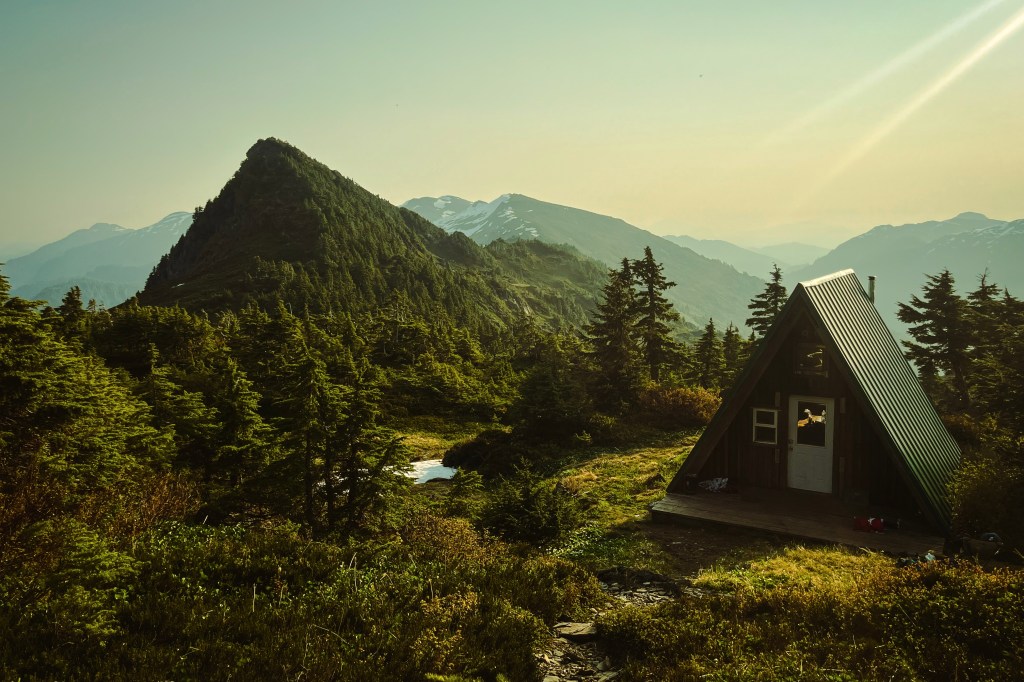
Sunny days made the work easier and everyone happier. Everyone began to look a little more alive.
If guiding tours hadn’t already felt like work, now it really didn’t at all. Between groups, we’d strip down and lay on the hot black stones of the beach. After tours, we’d stop the boat on the ride back to the marina to jump from the top of sheer rocks into the deep blue of the Alaskan Pacific.
It was in those days of sun and ease that I began to form a connection with someone unlike anyone I’d met before — Captain Mitch.
He was my father’s age and had lived many lives — a neuroscientist, pastor, and captain all wrapped into one. But despite our gap in age, education, and faith, we found a kind of kinship. Mitch had a grizzled look about him — laugh lines, sun-worn skin, and a gruff humor that always cut through the silence.
Together we made a great team. From the marina, we’d take guests to the island. On days I wasn’t giving tours, I worked as his deckhand — cracking jokes with passengers, pointing out whale spouts, and making sure no one stood up while we were underway.
And Mitch? He drove the Banana Boat — a 400-horsepower, bright yellow, twin-motor fast rescue boat — like he’d stolen it. The more nervous the guests looked, the harder he pushed the throttle. He’d bring the engines up to nearly 5,000 RPM and head straight for the rocky edges of the islands, turning at the last second. The passengers would whoop and holler, sprayed with sheets of saltwater that crashed over the sides of the boat.
We’d comb the jagged shorelines looking for wildlife — seals, eagles, deer — making sure everyone aboard had a good time, or at least a memorable one.
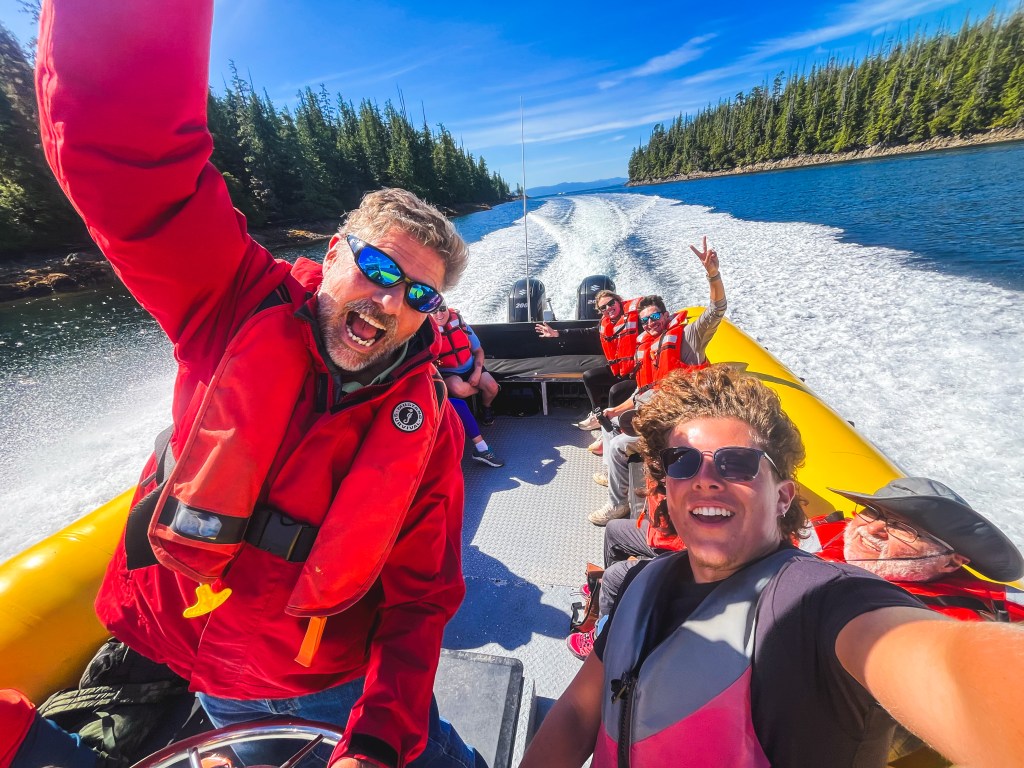
Some days the rain came down hard. I’d stand there with a squeegee, clearing the windshield while Mitch still drove like nothing had changed. The rain soaked through my jacket and hair, pelting my face with stinging drops. I’d work tirelessly, back and forth across the glass, but often the rain fell faster than I could clear it. Those days were always fun — the kind of wild that reminded you where you were: Southeast Alaska.
But the best part was always the hour and a half Mitch and I had to ourselves between dropping-off and picking-up the tour groups. Especially on sunny days.
We’d drift far out into the rolling blue of the Behm Canal. Mitch would pass me an apple or a plum, and I’d take off my shirt, lay on the big yellow inflatable tube that lined the boat, and let the sun soak in. The water rocked us gently. Sometimes I’d fall asleep; other times we’d just talk — about everything and nothing at all.
One day, a particularly hot and clear afternoon in late July, we sat a mile from shore — the only boat in sight. I told Mitch about something strange that had happened recently.
“You know, Mitch,” I began, “the other day something peculiar happened at the grocery store. I walked in and almost instantly met eyes with a woman — a young pretty woman, but not necessarily in a romantic way, just someone I admired. I smiled. She smiled back. No words. I went about my shopping, grabbed a tea, sat down to use the Wi-Fi and write.”
Mitch nodded, curious where it was going.
“About forty minutes later,” I continued, “the same woman came back. She walked straight over to my table, I pulled out my headphones as she took a seat across from me, and almost frantically said, ‘Hey, I know this is random, but I drove to the edge of town and had to turn around. My God told me to give this to you.’ Then she pressed $150 into my hand and said, ‘I hope you can get whatever you need. God bless you.’ And then she was gone.”
I paused. Mitch’s face wrinkled in thought.
“I didn’t need the money,” I said, “so I tucked it into the back of a book for a rainy day. I couldn’t have refused it — she’d driven all the way back just to find me. How she knew I was still there, I have no idea. What do you think, Mitch?”
He smiled, earnest and calm, and looked me in the eye.
“God is reaching out to you, Matt,” he said. “There’s no other way to put it.”
His words hung in the air for a while, carried off by the breeze that rippled across the water. I didn’t say anything right away — just watched the light scatter off the waves, a thousand tiny mirrors reflecting the sky. It was quiet out there, no boats, no engines, just the soft hum of the sea against the hull.
I wasn’t sure what I believed, or what “God reaching out” was supposed to look like. But something about the moment — the timing, the strange certainty in that woman’s eyes, Mitch’s steady voice beside me — it all felt like more than coincidence. Maybe it wasn’t about religion. Maybe it was just the universe, or fate, or whatever name you want to give to the feeling that you’re exactly where you’re meant to be.
Mitch leaned back in his seat and smiled that weathered smile of his. “You’ll come to find, life is serendipitous,” he said. “It’s not about finding the answers. It’s about paying attention to the doors that open.”
I nodded, letting the words sink in. The water rocked the boat gently. For the first time in a long time, I felt still. Not restless, not reaching — just still.
Maybe that’s what faith really is. Not knowing, but listening.
In the middle of August, CJ quit — no warning, and only with one of those short goodbyes that let me know I hadn’t seen the last of him. Our manager had laid into him for driving the box truck a little too fast, and that was it. He’d had enough. One afternoon he came home, dropped his gear by the door, and said he’d be flying out in a few days.
It wasn’t just him. Burnout was spreading like wildfire through the crew. People snapped over small things, silly feuds broke out, and slowly the lack of management became more and more apparent. The energy that had once carried us through long rainy days was gone, replaced by quiet grumbling and tired eyes.
I tried to keep my head down, determined to grind through the season, to not let the negativity drag me under. But I caught myself thinking about home too often — the warmth of California sun, long stretches of highway, the smell of a real authentic taqueria. I didn’t want to be someone counting down the days, not while living out what was supposed to be my dream. Still, the light at the end of the tunnel was all I could see.
I needed something to shift — a break, or maybe just a change of scene.
Aug 27th, 2025
That’s when the call came.
I was just about to leave the marina for the island when my Tulip’s name flashed on my phone.
“Hey Matt, kayak guides are needed up in Juneau,” she said. “Would you want to go for the month of September?”
I didn’t even hesitate.
“Hell yeah, I’d love to,” I said — maybe a little too quickly.
“Great,” she replied. “I’ll send your plane tickets tomorrow afternoon.” Then the line went dead.
I stood there for a moment, phone still in my hand, staring out at the water. I hadn’t seen it coming, but I couldn’t stop smiling. A twist in the story, right when I needed one.
September was just days away.
 The Dirtbag Database
Leave a comment